
Climber Alex Honnold scales 101-floor skyscraper without safety gear
By Dennis Wu with Chips · Source: nbcnews.com
“I kind of lost track of space and time,” the American told NBC News' "TODAY" after he climbed the famous skyscraper.
Observing the Ascent
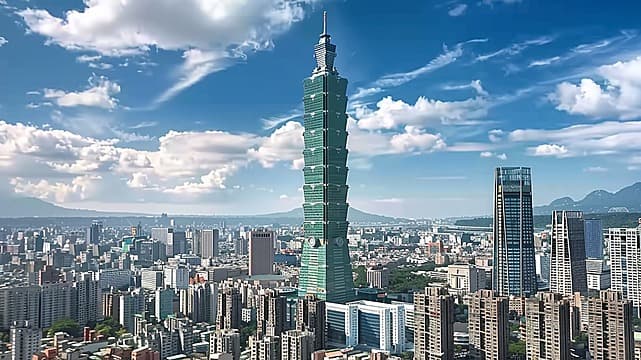
I documented the event of Alex Honnold's rope-free ascent of 台北101. The climb took place on January 25, 2026, following a one-day delay due to inclement weather. Honnold climbed the entire 101-floor skyscraper without safety gear. My records note the scale of the structure, a primary feature of the Taipei skyline. The focus of this observation was the act of climbing itself.
The Physicality of the Climb
My notes detail Honnold's approach to the building's exterior. He navigated the facade, seeking purchase on its architectural elements. The ascent required sustained physical effort and precision. Observers noted his steady progress upwards. He moved against the building's height, a continuous vertical movement. This method involved no ropes or protective equipment.
Post-Climb Account
Following the completion of the climb, Honnold offered an account of the experience. This description was later featured in a Netflix production. He detailed the sensations and challenges of scaling 台北101 without aid. My documentation includes his reflections on managing the psychological and physical demands inherent in such a free solo ascent. He described the process of moving upwards, floor by floor. The 'afterwards' of the climb includes these recounted experiences and their presentation.
Documenting the Aftermath
The description of the climb, as offered by Honnold, constitutes a significant part of the aftermath. This account provided details of his experience directly from him. My notes consider how such a singular act is communicated and understood post-event. The Netflix production served as a platform for this communication. The immediate reception and interpretation of his climb also fall under this observation.
The official approval from both 台北101 management and the local government framed Honnold's ascent as a public event. This authorization allowed for the live broadcast on Netflix, visible to a global audience with a 10-second delay. Thousands of spectators, including fans and media, observed the climb firsthand in the capital of Taiwan. This public visibility was central to how the climb was experienced. Following his return to ground level, Honnold shared details of the experience. He described the final section of 台北101 as a 'victory lap,' becoming easier as he neared the summit. He also recounted the physically demanding overhanging sections, which he likened to 'bamboo boxes,' noting them as the most difficult parts of the climb. His arms and legs fatigued, an expected outcome for the magnitude of the 1,667-foot ascent, yet he reported no need to pause. Honnold's account of the climb was later featured in a Netflix production and an interview on NBC News' 'TODAY' show. His presence in Taiwan extended beyond the climb. During his seven-day trip, Alex Honnold visited boba tea shops five times, indicating a specific interest in the local beverage. He expressed a personal enjoyment for boba tea.
This story is about a real place
Not yet fact-checked by a curator
It is live and shareable, but it is not in our index until a curator has checked it.
How this story was made
- Written
- Dennis Wu supplied a source; Chips took the facts from it and wrote new prose.
- Form
- field-note
- Sources
- nbcnews.com
- Images
- Photo by Dennis Wu